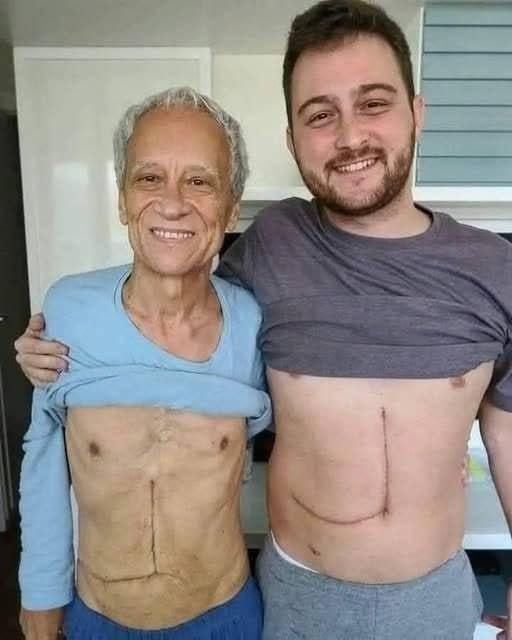
In the evolving landscape of modern medicine, few procedures carry the emotional gravity and biological magnitude of living liver donation. It stands at a rare crossroads where surgical precision meets profound personal sacrifice. When one family member consents to undergo major surgery to give a portion of a healthy organ to another, the moment transcends clinical terminology. It becomes a defining chapter in a family’s history—a demonstration of loyalty, courage, and unconditional love expressed not in words, but in action.
Across the United States and in transplant centers around the world, living liver donations have emerged as a lifeline for families trapped in the agonizing uncertainty of waiting lists for deceased donors. For recipients, the procedure represents nothing less than a renewed lease on life. For donors, it is a conscious, deeply considered act that reshapes the meaning of kinship and, in many cases, redefines a family’s legacy for generations to come.
The Biological Phenomenon: An Organ That Regenerates
To understand how living liver donation is even possible, one must begin with the organ itself. The liver occupies a singular place in human biology. Unlike the heart or lungs, it possesses a regenerative capacity so extraordinary it has often been described as almost mythological.
In a standard living donor procedure, surgeons remove a substantial portion of the donor’s liver—frequently as much as 50 percent. What follows is one of medicine’s most remarkable realities: within a matter of months, the remaining liver tissue in the donor and the transplanted segment in the recipient can regenerate to near-normal functional size. Cells multiply. Tissue reorganizes. Function restores. It is not merely healing; it is regrowth.
This regenerative power has fundamentally reshaped transplant medicine. In an era where waiting lists for deceased donor organs remain heartbreakingly long, living donation offers a critical and often life-saving alternative. It shortens the timeline between diagnosis and intervention. It allows surgeries to be scheduled electively rather than emergently. And it provides hope where previously there may have been only uncertainty.
For older parents and grandparents witnessing their adult children step into the role of donor, the experience often becomes a profound reminder of the strength embedded within family bonds. It is resilience made visible.
A Son’s Decision: Courage in Action
In many cases, the donor is an adult child. The scenario is as intimate as it is urgent: a father receives news that his liver is failing, that cirrhosis or another progressive condition has reached a terminal stage. The clock begins ticking. The waiting list looms.
Then, often without hesitation, a son volunteers.
What follows is not an immediate surgical date but a rigorous process of evaluation. Transplant teams conduct exhaustive physical examinations, imaging studies, and laboratory analyses to confirm compatibility and ensure the donor is in optimal health. Psychological assessments are equally critical, designed to confirm that the decision is informed, voluntary, and emotionally sustainable.
Only when every metric aligns does the surgical team issue the “green light.” In that moment, families frequently shift from quiet despair to cautious hope. There is still risk. There is still fear. But there is also a plan.
The operation itself is a feat of coordination. Performed in highly specialized transplant centers, donor and recipient surgeries typically occur simultaneously in adjacent operating rooms. This synchronized approach minimizes ischemic time—the period during which the liver segment is outside the body—thereby improving the likelihood of successful transplantation and long-term function.
The son’s decision becomes more than a medical intervention. It transforms into a symbol of devotion—proof that, even at the edge of vulnerability, family love can carve out a path forward.
The Realities of Recovery
Yet responsible storytelling requires candor. Living liver donation, for all its triumphs, is not a minor procedure. It is major abdominal surgery, and recovery demands patience, resilience, and medical vigilance.
Donors usually remain hospitalized for several days under intensive monitoring. Pain management, mobility exercises, and close observation of liver function are part of the immediate postoperative landscape. After discharge, weeks—and sometimes months—of recovery follow before a full return to daily routines is realistic.
Complications, though often manageable, are part of the clinical reality. Donors may experience temporary infections, fluid accumulation, or fluctuations in liver enzyme levels. In rarer instances, more serious complications require prolonged intervention and specialized care.
For families, especially those already navigating the vulnerabilities that accompany later life, these risks necessitate forthright conversations with surgeons and transplant coordinators. The benefits are immense, but so too is the physical toll. Transparency is not optional; it is essential.
Despite these challenges, the long-term outlook for living donors is overwhelmingly positive. The majority report that they would make the same choice again. When asked why, their answers tend to converge on a singular theme: time. The extra years shared. The milestones reclaimed. The ordinary days restored.
The Ripple Effect Within Families and Communities
A transplant’s impact rarely stops at the operating room doors. The procedure often becomes a catalyst for collective action. Siblings adjust work schedules. Spouses coordinate medications and appointments. Grandchildren deliver meals or offer companionship during long afternoons of recovery.
Communities frequently mirror this solidarity. Neighbors organize meal trains. Faith groups provide transportation. Online networks amplify messages of encouragement. In a digital era sometimes criticized for fostering distance, transplant journeys often reveal its capacity for unity.
These layered acts of support form an emotional scaffolding that sustains both donor and recipient through the long arc of healing. They reinforce a powerful truth: no family endures this journey in isolation.
Legacy, Time, and the Meaning of Hope
At its core, living liver donation is an act centered on time—time regained, time extended, time reimagined. It is a father finding the strength to attend his daughter’s wedding. A grandfather witnessing the birth of another grandchild. A family reclaiming moments once thought lost.
For many older adults, these stories prompt necessary, if uncomfortable, conversations about health, mortality, and legacy. They encourage families to discuss organ donation openly, to clarify wishes, and to confront the realities of chronic disease before crisis strikes.
Modern medicine provides extraordinary tools, but it is human courage that activates them. Living liver donation exemplifies what happens when scientific advancement and personal devotion intersect. While uncertainty is an inherent part of any major medical journey, the bravery embedded in this decision leaves an indelible mark—not only on the lives saved, but on the generations that follow.
In the end, living liver donation is more than a procedure. It is a testament to human resilience. It demonstrates that love, when supported by medical expertise and guided by informed consent, possesses the extraordinary power to regenerate not only an organ, but a family’s future.
Be First to Comment