The Architecture of Flavor: Honoring the Mazah Fruit
The true distinction of Jam Mazah lies not in embellishment, but in restraint. In a marketplace crowded with commercial preserves that often lean heavily on sugar as both preservative and bulk filler, this approach takes a markedly different stance. Here, sugar is not the protagonist. It is cast in a supporting role—present, necessary, but careful not to overshadow the star of the composition: the Mazah fruit itself.
The objective is clear and disciplined. Rather than masking the fruit’s character beneath cloying sweetness, the method constructs a framework in which its natural complexity can fully emerge. The Mazah fruit carries its own nuanced profile—subtle shifts between sweetness and brightness, depth without heaviness—and the recipe is structured to amplify those qualities rather than dilute them.
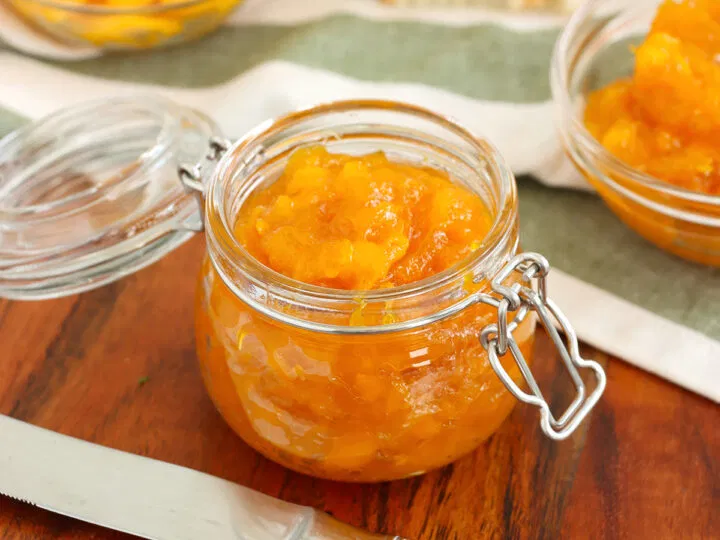
Early in the process, a measured splash of lemon juice is introduced. Its inclusion is not decorative but strategic, fulfilling two essential functions. First, it lends a clean acidity that sharpens and balances the sugar, preventing the preserve from tipping into monotony. Second, its natural pectin content plays a structural role, helping the jam achieve its characteristic body without reliance on artificial thickeners. As the mixture settles into a low, patient simmer, the fruit fibers gradually surrender to the heat. What begins as distinct pieces slowly softens and melds, eventually coalescing into a glossy, unified preserve. The final result is smooth yet vibrant, layered yet balanced—a flavor profile that feels both rounded and alive.
A Method Rooted in Ease
For those unfamiliar with the world of preserving, the terminology alone can feel intimidating. Words like “set,” “pectin,” and “sterilization” often conjure images of technical precision and narrow margins for error. Yet the preparation of Mazaah Confitor is, in practice, remarkably forgiving. It unfolds in three deliberate stages, each accessible even to a novice.
Maceration:
The process begins with careful preparation. The fruit is peeled and diced with attention to uniformity, then combined with sugar and lemon juice and left to rest. This pause is far from incidental. During this stage, osmosis quietly performs its work: sugar draws the fruit’s natural juices outward, creating a syrupy base before the pot ever meets the flame. The result is twofold—a richer texture and a more efficient cooking process once heat is applied.
The Slow Simmer:
Heat, when introduced, is kept controlled and gentle. This is not a recipe that rewards haste. A low flame allows water content to evaporate gradually while the sugars begin their subtle caramelization. The cook’s role is largely supervisory—occasional stirring to prevent scorching, watchful patience rather than constant intervention. Over time, the mixture thickens, deepens in color, and develops complexity without losing the integrity of the fruit.
The “Cold-Plate” Benchmark:
Determining when the jam has reached its setting point is less about instrumentation and more about intuition. The cold-plate test remains a trusted, low-technology standard. A small spoonful placed on a chilled plate and gently nudged should wrinkle slightly at the surface—a tactile, visual cue that the preserve has achieved the proper consistency. It is a simple method, reliable and accessible, that underscores the recipe’s approachable nature.
Versatility in a Jar: From Tradition to Table
Once cooled and transferred into sterilized jars, Jam Mazah reveals itself as more than a seasonal indulgence. It becomes a versatile staple. Its uses extend well beyond the predictable smear on toast—though paired with crusty, freshly toasted bread, it performs admirably. It finds particular harmony alongside warm, traditional flatbreads, where its brightness contrasts beautifully with subtle char and softness. In the realm of pastry, it serves as a lively filling, its balanced acidity cutting cleanly through buttery layers and delicate doughs.
The recipe also leaves room for personal interpretation. A cinnamon stick introduced during the simmer can lend quiet warmth. A split vanilla bean can round out the fruit’s natural sweetness with aromatic depth. Such additions are optional, gestures of individuality rather than requirements.
Ultimately, however, each jar offers more than culinary utility. It holds the essence of fruit at its seasonal peak—captured, preserved, and made accessible long after its harvest window has closed. In a broader sense, it serves as a reminder that the most enduring recipes in gastronomy are rarely the most complicated. Often, they are the ones that rely on few ingredients, steady hands, and an abundance of care.
Be First to Comment