The first welt barely registered. It was the sort of minor irritation most of us dismiss without ceremony—a small, raised inconvenience easily blamed on a rogue mosquito or the ambient stress of an overextended week. It stood alone, insignificant and forgettable. I gave it no more attention than a passing scratch.
By the second night, however, the narrative had shifted.
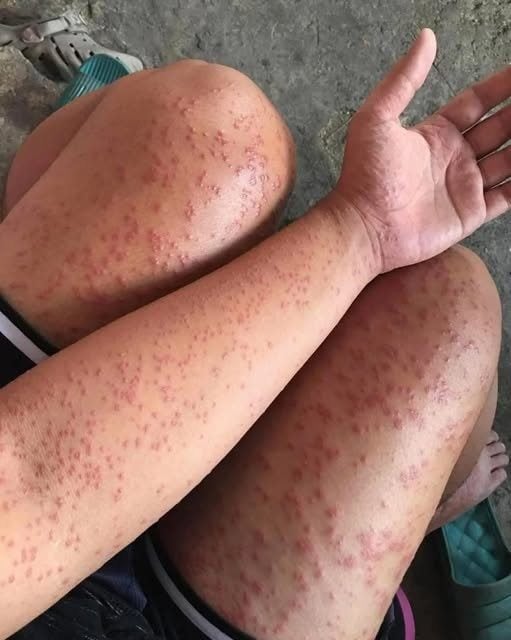
What began as an isolated blemish evolved into a deliberate pattern, and with that pattern came a quiet but unmistakable unease. The bumps no longer appeared at random. They surfaced in clusters, deliberate and geographic, mapping themselves along my arms, shoulders, and back with unsettling precision—exactly where my skin met the mattress. The sensation was not the sharp flare of a typical bite. It was subtler, more insidious: a low, persistent thrum beneath the surface of the skin. It felt less like a fleeting allergic reaction and more like a coded message my body was attempting to transmit.
Lying awake in the dark, I scratched absently and rehearsed the comforting script of denial. It’s nothing, I told myself. Stress. Dry air. A passing irritation. Yet the body, far less inclined toward narrative convenience, continued its protest.
The Question Every Reporter Asks: What Changed?
A decade in journalism teaches you to hunt for variables. Every story hinges on that central inquiry: What changed, and when? The discipline becomes instinctive. You look for the deviation, the disruption in routine, the subtle alteration that explains the shift.
In this case, the data refused to cooperate.
There were no new detergents lining the laundry shelf. No experimental recipes or suspect takeout meals. No recent wardrobe additions crafted from questionable fabrics. My daily patterns remained intact—closed loop, predictable, undisturbed.
The only variable was the environment itself.
The apartment had initially presented itself as a minor triumph: an old-world space rich with character, its aging bones softened by charm. The floorboards creaked with theatrical timing. The walls seemed thick with stories that had never made it into print. It was the kind of place that suggested history without disclosing its footnotes.
But under the weight of sleeplessness and mounting irritation, that romance began to curdle. The creaks felt less quaint. The age felt less dignified. Each welt became a reminder that history is not merely aesthetic—it is biological. I began to confront an uncomfortable possibility: I was not alone in this room in the way I had assumed.
The Invisible Residents
By the third night, the psychological toll rivaled the physical discomfort. Sleep deprivation has a way of sharpening the imagination, particularly when paired with unexplained stimuli. My thoughts narrowed toward the microscopic. I found myself cataloguing potential culprits with investigative rigor.
There were the patient predators—bed bugs concealed within the forgotten seams of the mattress, disciplined and nocturnal.
There were residuals—fleas embedded deep within carpet fibers, perhaps lingering long after a former tenant’s pet had vacated the premises.
There was the invisible burden of dust mites, thriving quietly on the accumulated residue of years: skin cells, perspiration, breath absorbed into pillows and upholstery.
And then the environmental possibilities: airborne mold spores circulating unseen, or the chemical afterimage of industrial cleaners clinging stubbornly to the surfaces of the home.
As some welts dulled into tender aches and others flared angrily beneath my fingernails, a disquieting realization emerged. My body had likely identified the problem before my conscious mind was willing to acknowledge it. Physiology, it seemed, was ahead of psychology.
The Morning of Reckoning
Denial, like most coping mechanisms, has a shelf life.
The following morning, it expired.
I stripped the bed down to its skeletal frame in what can only be described as a ritual of confrontation. Every seam was examined. Every corner scrutinized. I lifted the mattress, inspected the folds, peered into the dim spaces where fabric meets frame. Sheets, pillowcases, blankets—anything that could be washed—were subjected to the highest heat my appliances would permit.
The shower that followed felt less hygienic and more symbolic. I scrubbed with an urgency that bordered on superstition, as if the discomfort were not merely on my skin but embedded within it.
In the days that followed, the welts receded. The itching softened. Sleep returned in cautious increments.
But the lesson lingered.
We are conditioned to treat physical discomfort as an inconvenience to be muted—a symptom to medicate, an annoyance to suppress. Yet discomfort is rarely random. It is data. It is information delivered through the most intimate channel available to us.
Unfamiliar spaces carry layered histories we cannot see. What appears benign may host ecosystems, residues, and remnants of past occupancy that quietly intersect with our biology. Sometimes the body registers the breach before the intellect is prepared to process it.
Clusters of welts are not merely cosmetic disruptions. They are signals. And when the skin begins to speak in patterns, it is worth listening.
Be First to Comment